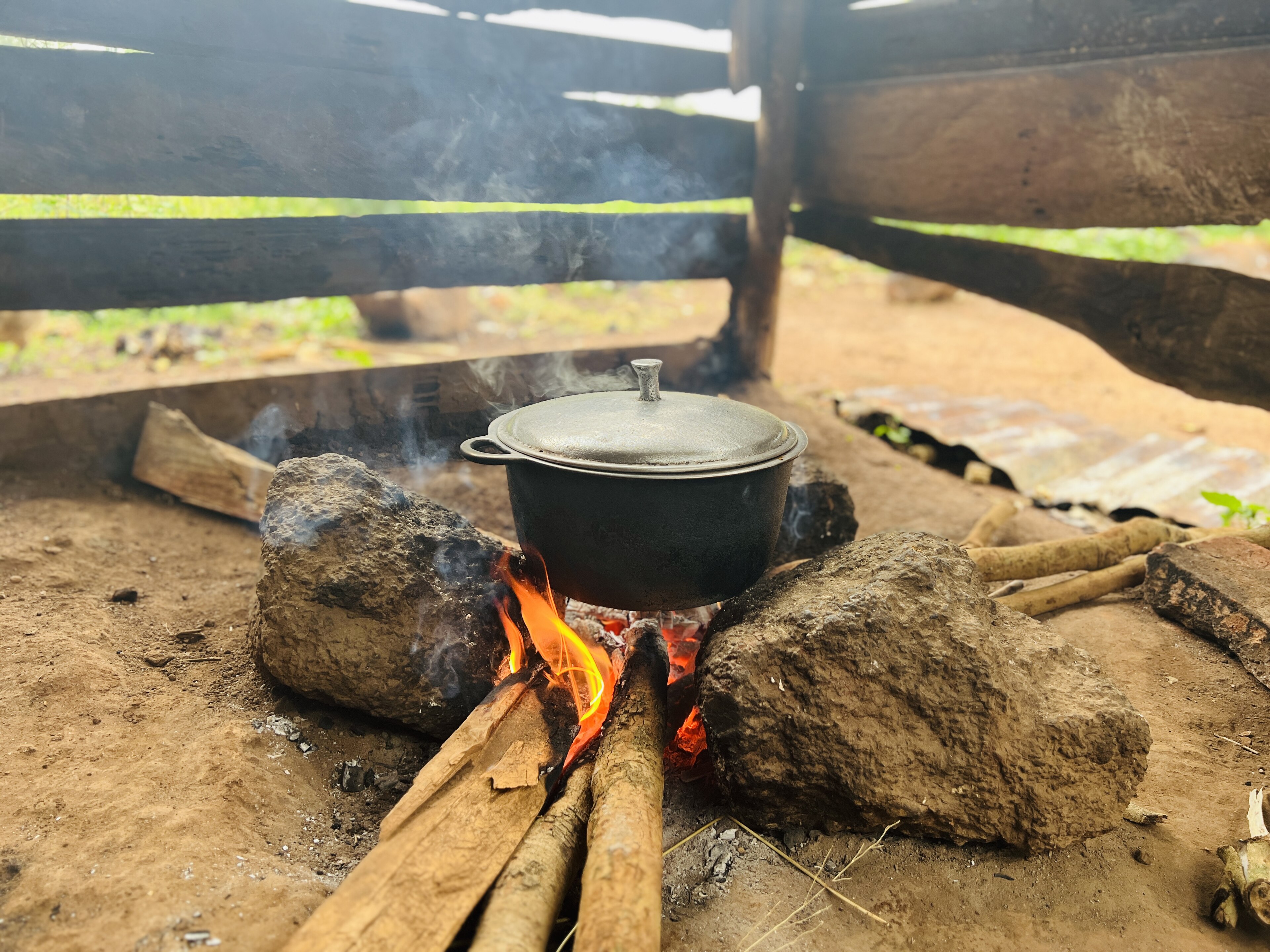
It's been a period of recalibration for the carbon market. Over the last year in particular, we have seen non-Paris-aligned methodologies retired from use within Gold Standard, and the publication of updated methodologies aligned with Article 6, in what Gold Standard describes as a comprehensive modernisation of carbon accounting across the cookstove sector. Verra also released a new clean cooking methodology, VM0050, in October 2024, with version 2.0 already under revision.
These changes have increased accuracy and conservativeness within the clean cooking carbon market. For both Gold Standard and Verra, that means more conservative, better-evidenced defaults, including updated fNRB values, and mechanisms to prevent over-crediting. For Gold Standard in particular, it includes per-capita baseline caps and the introduction of the Downward Adjustment Factor, which aligns carbon crediting with the host country's ambition trajectory.
There are a number of different methodologies and standards occupying the clean cooking space. This article will present the new methodologies, set out their unique characteristics, and provide a summary table of the different methodologies at the end. If you have a project and you are wondering what methodology suits it best, head to the Eligibility Assessment page of the website and click Clean Cooking for a full assessment of the best methodology for your project.
RECH v5.0 (formerly TPDDTEC)
Gold Standard's most widely used cookstove methodology, formerly TPDDTEC, has now been dubbed RECH v5.0, and covers non-metered clean cooking and heating technologies with a focus on improved biomass stoves. Projects using the methodology should implement field-based measurement technologies or practices, for example Kitchen Performance Tests, or can use the D-SMART digital monitoring tool as an optional add-on. Metered devices can no longer use RECH; they move into MECD.
What's new with the update:
- A structured, mandatory five-step baseline-setting process
- Downward Adjustment Factors integrated into crediting
- Per-capita baseline caps to prevent over-crediting
- Mandatory adjustment for the Hawthorne effect, and accounting for stove stacking
- Cradle-to-gate embodied device emissions included
- Impractical field-testing requirements replaced with statistically robust sampling approaches that work at large scale
MECD v2.0
The MECD v2.0 methodology is the successor to the original Metered and Measured Energy Cooking Devices methodology (versions 1.0 to 1.2) and covers fully metered cooking technologies, which implement direct, 100% device-level measurement via Continuously Tracked Energy Consumption (CTEC). The methodology covers a range of fuel types, including LPG, electric, biogas and bioethanol stoves, as long as consumption is measured in real time. This allows for high-confidence crediting at scale.
What's new:
- Continuously Tracked Energy Consumption (CTEC) is the defined measurement standard: direct, 100% device-level, in real time
- A fossil fuel rule: where the activity fuel is a fossil fuel such as LPG, only the energy-efficiency improvement is credited
- Expanded scope: all metered devices, including electric and biogas, previously covered under TPDDTEC now sit within MECD
SMEC v4.0
The Simplified Methodology (SMEC v4.0) is the successor to version 3.0. It can only be used for micro-scale clean cookstove projects and allows for a simpler validation process, which reduces the barriers to carbon crediting for small-scale projects.
What's new:
- The efficiency-ratio calculation of earlier versions is abandoned
- The baseline is now capped using a minimum service level calculation, limiting the credits that can be produced
- Mandatory biennial project Kitchen Performance Tests are required to measure actual fuel use
AWMS v2.0
The AWMS methodology is a slightly different style of methodology to the others and is used for biogas systems recovering methane from animal manure and organic waste, with the biogas used for thermal energy generation.
What's new:
- Strengthened safeguards for methane and digestate management
- Brought into the Paris-aligned accounting framework alongside the other methodologies
VM0050 (Verra)
The VCS cookstove methodology VM0050 covers emission reductions from energy efficiency and/or fuel switch. It replaces VMR0006 and VMR0011 and consolidates them into one framework. The methodology boasts new conservative features, including a 0.95 adjustment factor applied to emission reductions and a built-in cross-check which takes the minimum of measured fuel savings and the efficiency-implied figure. It allows the use of Kitchen Performance Tests or UNFCCC default values for the baseline, and KPTs, direct fuel measurement or fuel purchase monitoring for project fuel consumption.
One to watch: CLEAR
Developed by the Clean Cooking and Climate Consortium (4C), led by the Clean Cooking Alliance, the Comprehensive Lowered Emission Assessment and Reporting (CLEAR) methodology aims to be a single framework covering all cooking transition scenarios, metered and non-metered alike. It has been submitted to the UNFCCC under the Article 6.4 Paris Agreement Crediting Mechanism, and Gold Standard has consulted on adopting it within GS4GG. If it lands as intended, it could unify much of the landscape described above under one methodology.
The methodologies at a glance
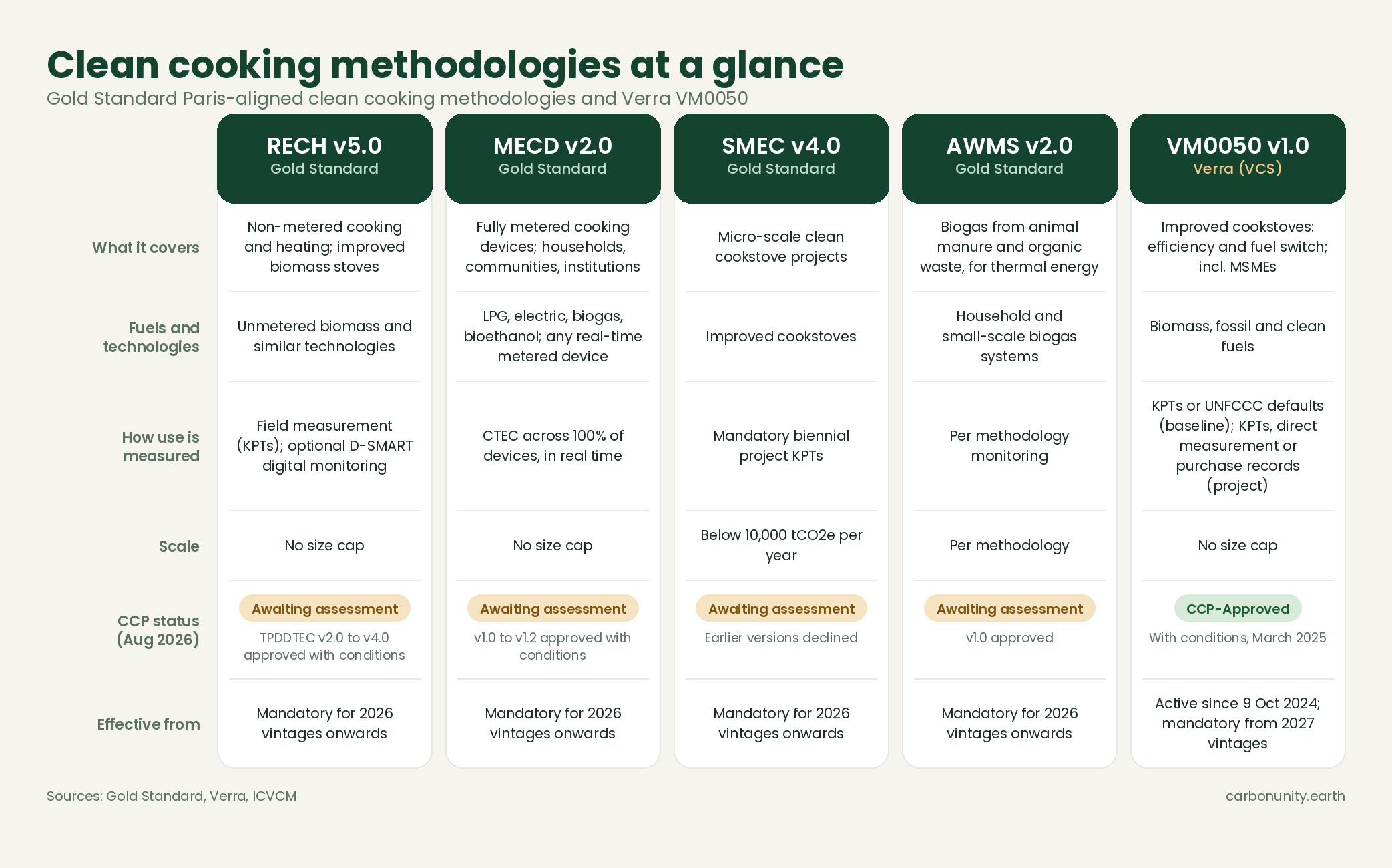
CCP approval is version-specific: a predecessor's status does not carry over automatically, so the new Gold Standard versions await their own assessment.
Sources
- Gold Standard media release, 5 May 2026
- RECH v5.0
- MECD v2.0
- SMEC v4.0
- AWMS v2.0
- Verra VM0050
- ICVCM cookstove approvals, March 2025
- ICVCM further approvals, June 2025
- CLEAR methodology (Clean Cooking Alliance / 4C)
- Gold Standard CLEAR consultation
See if your project qualifies
Run a free eligibility assessment in under five minutes. Suggestive only - please review with a carbon expert before acting on results.
Start eligibility assessment →