Guides and blogs Guide
Which carbon standard is right for my project?
How to choose between Verra, Gold Standard, Puro, Isometric, CSI, Rainbow and CAR for a biochar, clean cooking or ARR project.
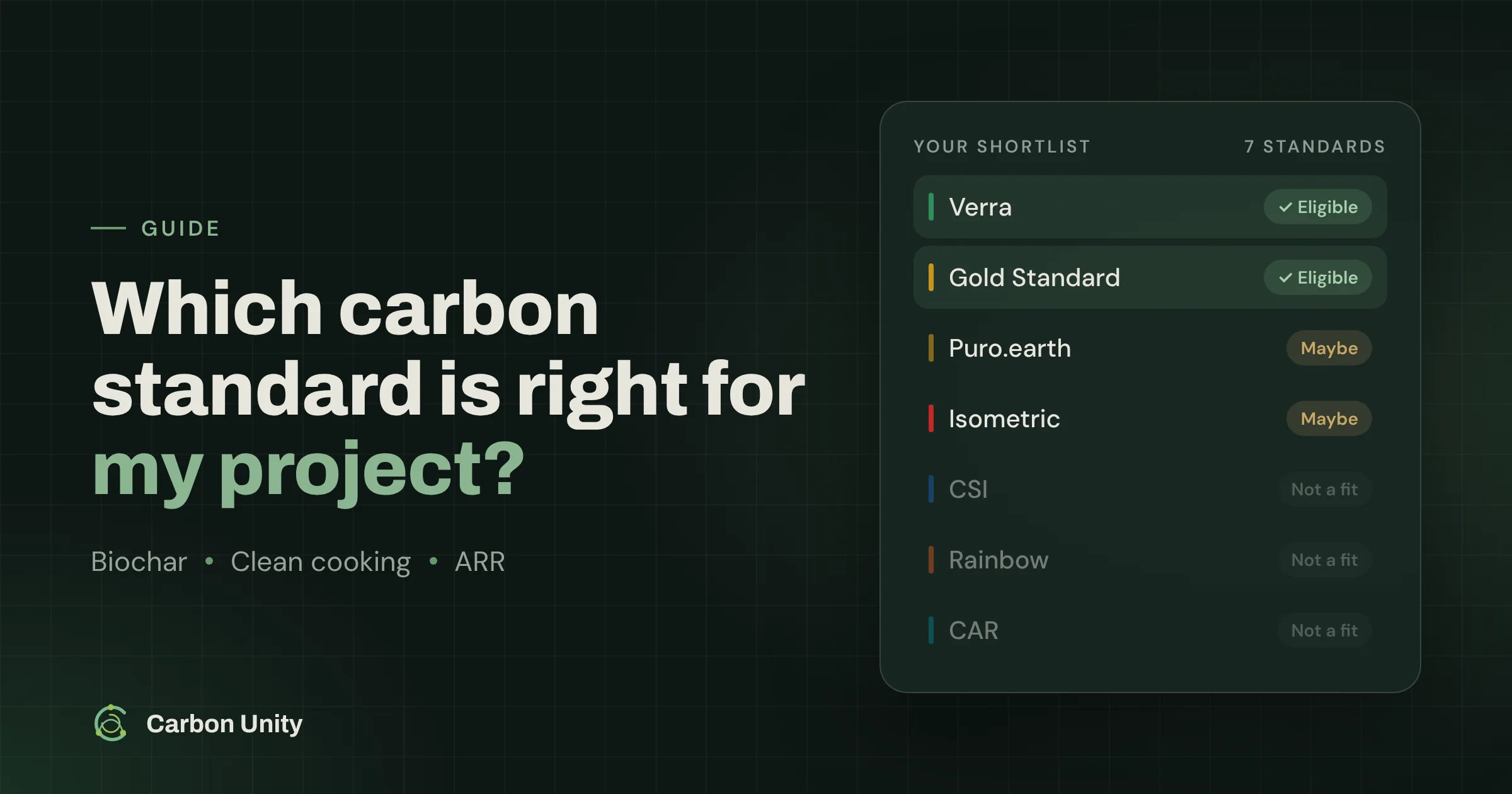
Choosing the right carbon standard is one of the foundational choices for a carbon project developer, and it shapes the rest of the project. The standard sets the methodology you follow, how credits are calculated, what you have to monitor, and who is likely to buy the credits. Choosing the wrong standard means building the project to the wrong specifications, which can waste time and resources.
For most project types, the choice comes down to only a couple of standards and methodologies, and a few questions help developers decide which is best for them.
Start with your project type
Not every standard covers every project type. These are the methodologies our tools check:
Biochar
7 methodologies- VerraVM0044 v1.2
- Puro.earthEdition 2025 v2
- IsometricBiochar v1.3
- CSIGlobal Biochar C-Sink
- CSIGlobal Artisan C-Sink
- RainbowBiochar
- Climate Action ReserveUS and Canada only
Clean cooking
4 methodologies- VerraVM0050 v1.0
- Gold StandardMECD v2.0
- Gold StandardSMEC v4.0
- Gold StandardRECH v5.0
ARR
1 methodology- VerraVM0047 v1.1, area-based and census-based
Five questions that narrow it down
-
Where is the project?
Project location can rule out some standards and methodologies immediately. For example, CAR's biochar protocol only covers the US and Canada. Even where eligibility isn't affected, the country can change key factors such as the fraction of non-renewable biomass (fNRB) and the downward adjustment factor (DAF), depending on the methodology chosen. Both can have a big impact on credit volumes.
-
What is the project scale?
Carbon standards treat large pyrolysis plants very differently from small distributed kilns. Some standards only cover one of the two routes, while others, like Verra VM0044, have separate high and low technology routes depending on the technology used. The size and type of the operation can affect the monitoring data you collect, how strict the eligibility criteria are, and which buyers are interested in the project.
-
Project technology, fuel and other details
Small project details can change the best standard for your project. In clean cooking, for example, solar thermal cookers and electric cookers fall under different methodologies. In biochar, as mentioned above, the technology affects which methodologies are open to you. The feedstock matters too, as some standards only accept certain feedstocks or ask for specific evidence about them.
-
Removal or reduction, and who's buying?
Biochar and ARR remove carbon, while clean cooking reduces emissions. Some removal-focused buyers prefer removal-focused registries such as Puro.earth and Isometric, while more traditional registries like Verra (VCS) and Gold Standard have the deepest markets for clean cooking projects. If you're approaching project development with a buyer in mind, it's often worth asking which standards they prefer and building the project to that standard.
-
What can you monitor?
Each methodology requires different evidence: lab tests on carbon content and H/Corg for biochar, usage surveys or stove use monitors for clean cooking, tree measurements for ARR. Your project should use data you can collect for the whole crediting period.
Check your project in minutes
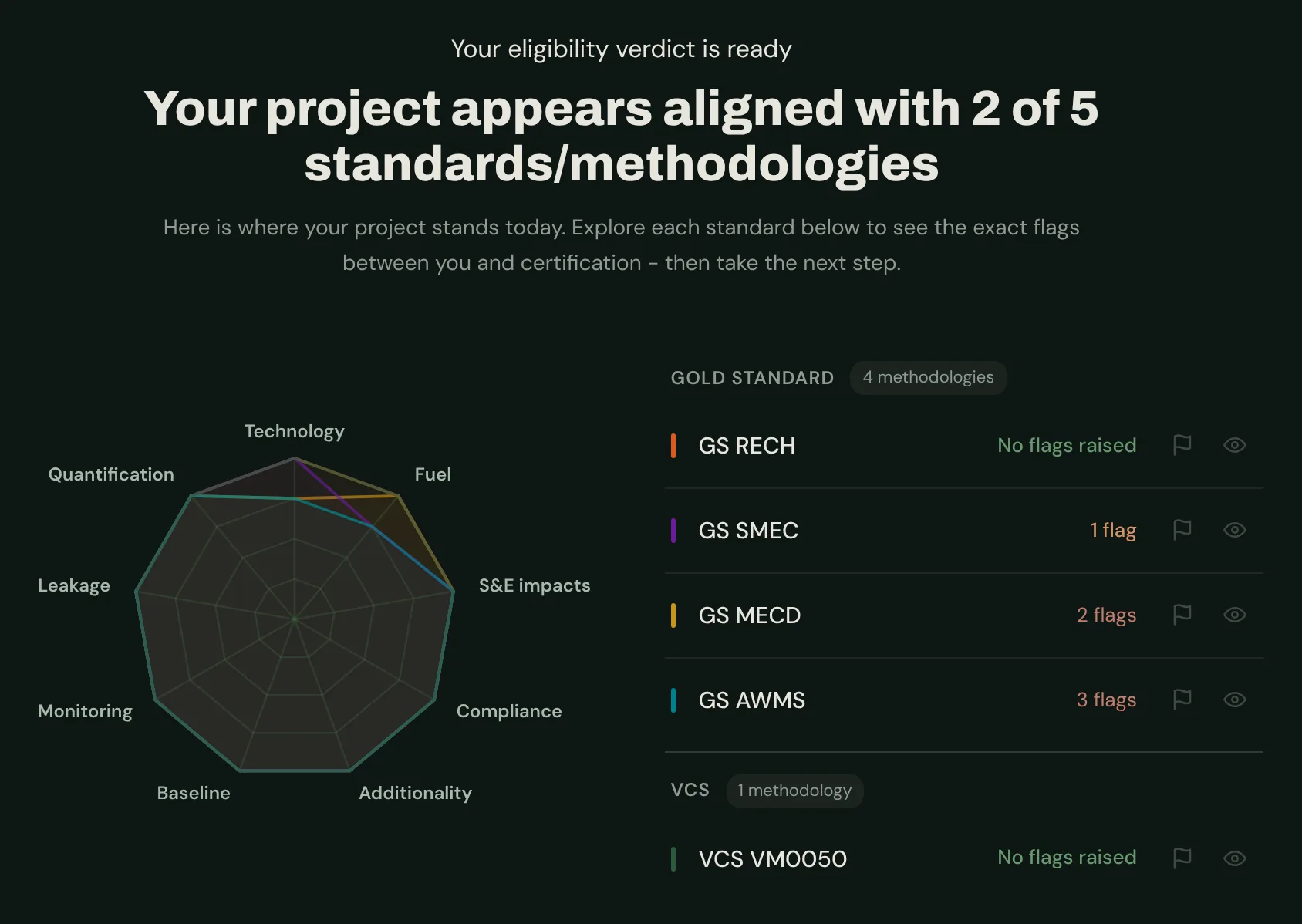
The Carbon Unity eligibility assessment tool assesses your project against multiple methodologies at once. Once you've answered the questions, you get a verdict for each methodology. Every verdict shows the reason and the section of the methodology it comes from, so you can check the eligibility criteria yourself.
Verdicts are Eligible, Maybe Eligible or Ineligible. "Maybe Eligible" usually means you answered "unknown", or the answer depends on details the methodology leaves open. Those are the points to pin down first.
See which standards your project can qualify for
Free during the beta. No account needed.
What the check won't tell you
This tool is only a screening, not a validation. A validation and verification body will still want evidence on project aspects like additionality and your rights to the land or carbon. Use it to narrow down the standard, then check the detail in the methodology text, or talk to us.
Next step
Compare the credits
Once you know which standards your project is eligible for, the quantification tool estimates credits under each one, so you can compare the numbers side by side.
Sources (9)
- Verra: VM0044 biochar methodology, v1.2
- Verra: VM0047 afforestation, reforestation and revegetation, v1.1
- Verra: VM0050 energy efficiency and fuel switch in cookstoves
- Gold Standard: clean cooking and thermal energy methodology updates (May 2026)
- Puro.earth: methodology document library
- Isometric: Biochar Production and Storage protocol, v1.3
- Carbon Standards International (CSI)
- Rainbow
- Climate Action Reserve: U.S. and Canada Biochar Protocol